
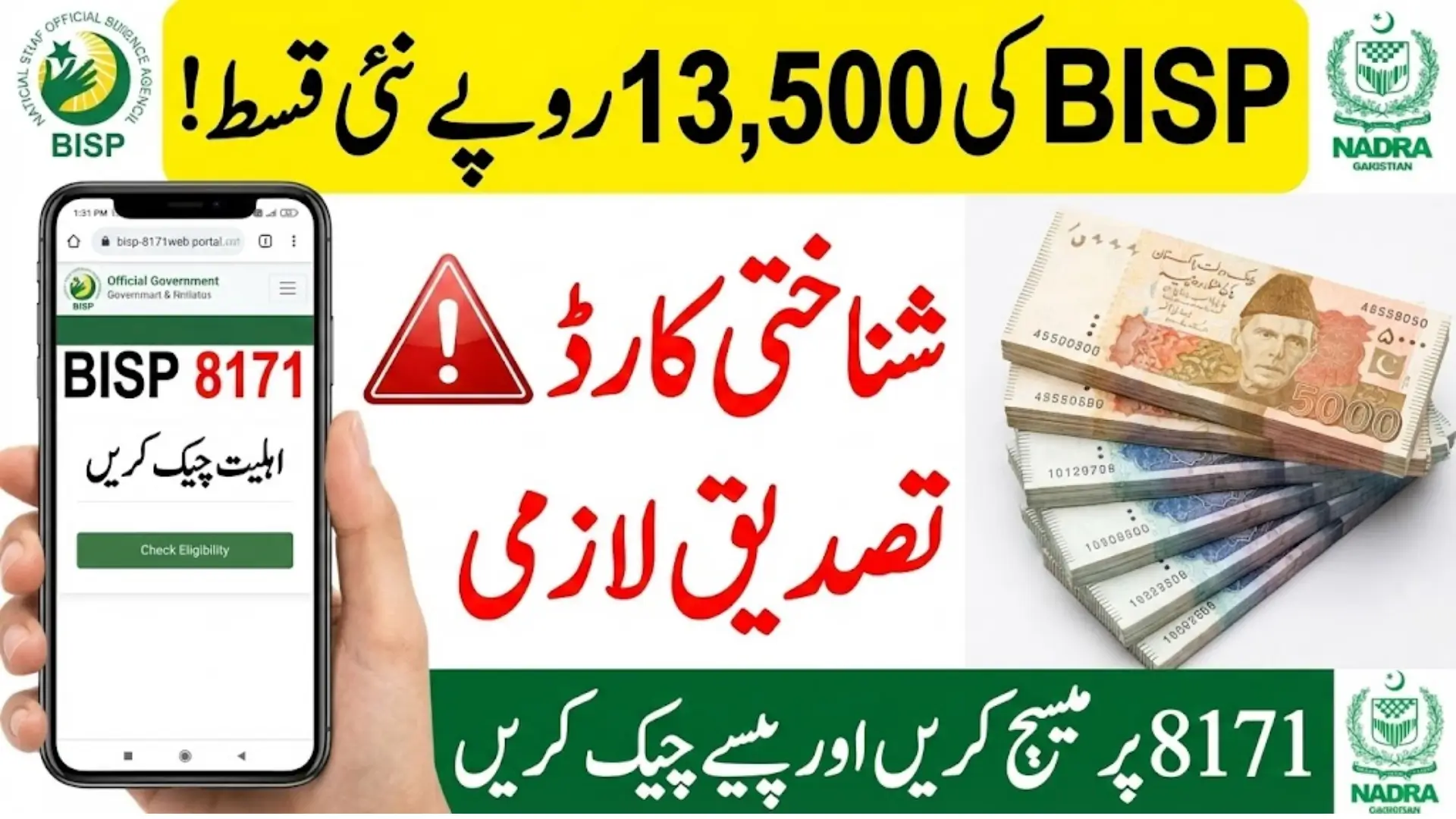
BISP 8171 CNIC Validation 2026
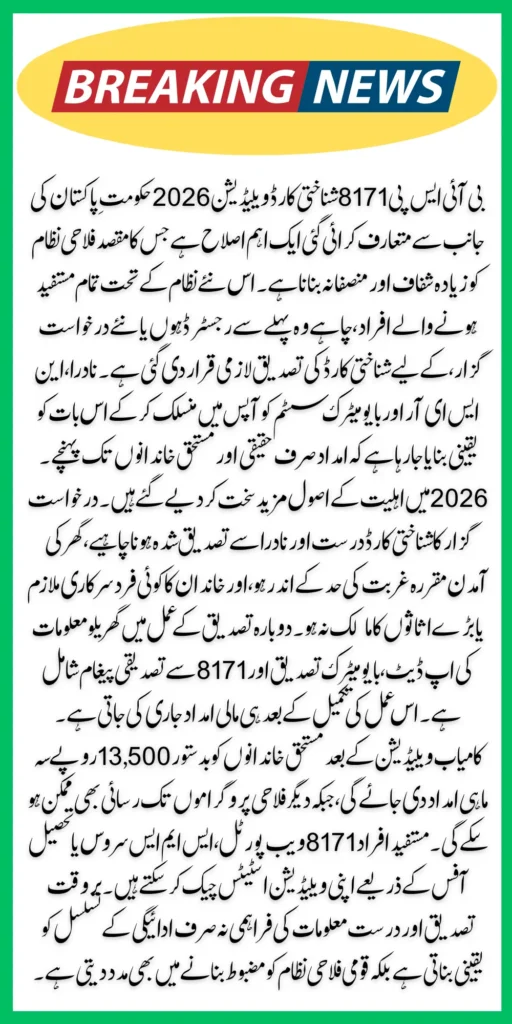
The BISP 8171 CNIC Validation 2026 is a major update introduced to improve transparency and fairness in Pakistan’s social welfare system. This update focuses on verifying beneficiary data to ensure that financial assistance reaches only deserving households. Under the new system, CNIC-based validation has become mandatory for both existing and new beneficiaries.
With rising inflation and changing economic conditions, the government has strengthened the verification process by linking NADRA, NSER, and biometric systems. This article explains the complete eligibility criteria, re-verification steps, and updated payment details in a clear and human-friendly way.
Green Tractor Scheme Phase 3 Online Application 2026 – Eligibility & Subsidy Guide
What Is BISP 8171 CNIC Validation 2026?
The CNIC validation process is a re-verification mechanism used to confirm the identity and financial status of beneficiaries. It ensures that outdated, duplicate, or incorrect records are removed from the system. This helps BISP manage funds efficiently and expand coverage to families that truly need support.
Through the 8171 system, beneficiaries can now check their validation status digitally. This reduces dependency on physical visits and minimizes delays. The focus is on accuracy, transparency, and ease of access for people across Pakistan.
Before moving forward, it is important to understand the key goals behind this update. These goals explain why CNIC validation is now compulsory.
- Ensuring only eligible households receive payments
- Updating household income and asset information
- Removing ineligible or inactive beneficiaries
These measures help strengthen trust in the welfare system and improve service delivery.
Full Eligibility Criteria for BISP 8171 in 2026
Eligibility under the 2026 update is based on stricter and more accurate indicators. BISP now evaluates households using income data, employment records, and asset ownership information. Even small changes in financial status can affect eligibility.
Every beneficiary must have a valid CNIC registered with NADRA. The system also checks whether any family member is a government employee or taxpayer. Households that no longer meet poverty thresholds may be removed, while newly vulnerable families can be added.
The basic eligibility conditions are listed below to help readers understand the requirements clearly.
- CNIC must be valid and verified through NADRA
- Household income must fall within approved poverty limits
- No family member should hold a government job
- No ownership of luxury vehicles or large property
Meeting these conditions does not guarantee approval, but failing any of them may result in disqualification.
Step-by-Step CNIC Re-Verification Process 2026
The re-verification process is designed to be simple but accurate. Beneficiaries are required to confirm their household information and complete biometric verification. Providing correct data is critical, as false information can lead to rejection.
The process begins with data review in the NSER system. After that, biometric authentication confirms identity through NADRA-linked systems. Once all checks are complete, the beneficiary receives a confirmation message from 8171.
Below are the main steps involved in CNIC re-verification.
- Update household details in the NSER database
- Verify income, employment, and family information
- Complete biometric verification
- Receive confirmation SMS from 8171
After completing these steps successfully, beneficiaries become eligible for payments.
PMT Score Check Online Via 8171 Web Portal 2026 Update
How to Check BISP 8171 CNIC Validation Status
BISP offers multiple methods to check CNIC validation status, making the process accessible for everyone. Beneficiaries can choose the method that best suits their situation, whether they have internet access or not.
The online portal is the fastest option for urban users, while the SMS service is ideal for rural areas. Both methods provide real-time updates and reduce the need for office visits.
Here is a simple comparison to help readers understand the available options:
| Method | Requirement | Purpose |
|---|---|---|
| 8171 Web Portal | Internet & CNIC | Instant status check |
| SMS to 8171 | Registered SIM | Basic phone verification |
| Tehsil Office | CNIC & documents | Manual assistance |
Using the correct method helps avoid confusion and delays.
New BISP 8171 Payment Details for 2026
After successful CNIC validation, beneficiaries remain eligible for the Rs. 13,500 quarterly payment. This amount is released only after confirmation through the 8171 system. Any pending or failed verification can result in payment suspension.
Validated households may also qualify for additional welfare benefits, such as education stipends and emergency relief programs. Accurate data ensures priority support during national emergencies.
To understand the benefits clearly, review the key outcomes of successful validation.
- Continued Rs. 13,500 financial assistance
- Eligibility for other BISP-linked programs
- Priority during emergency aid distribution
These benefits highlight why timely validation is important.
Required Documents for CNIC Validation
Preparing documents in advance helps avoid repeated visits and delays. Many applications are held back due to missing or outdated records. Beneficiaries should ensure all documents are current.
The required documents include:
- Original CNIC
- SIM registered on the CNIC
- Updated NSER household record
- Children’s B-Forms (if applicable)
Keeping these documents ready ensures a smooth verification process.
BISP Social Protection Wallet 2026 — New SIM Registration & Digital Payments
Conclusion
The BISP 8171 CNIC Validation 2026 is a critical reform aimed at improving fairness, transparency, and efficiency in Pakistan’s welfare system. By enforcing stricter eligibility checks and digital verification, the program ensures that financial assistance reaches families who genuinely need support.
Beneficiaries should complete CNIC validation on time and keep their household information updated. This not only guarantees uninterrupted payments but also strengthens the overall impact of social protection programs in changing economic conditions.